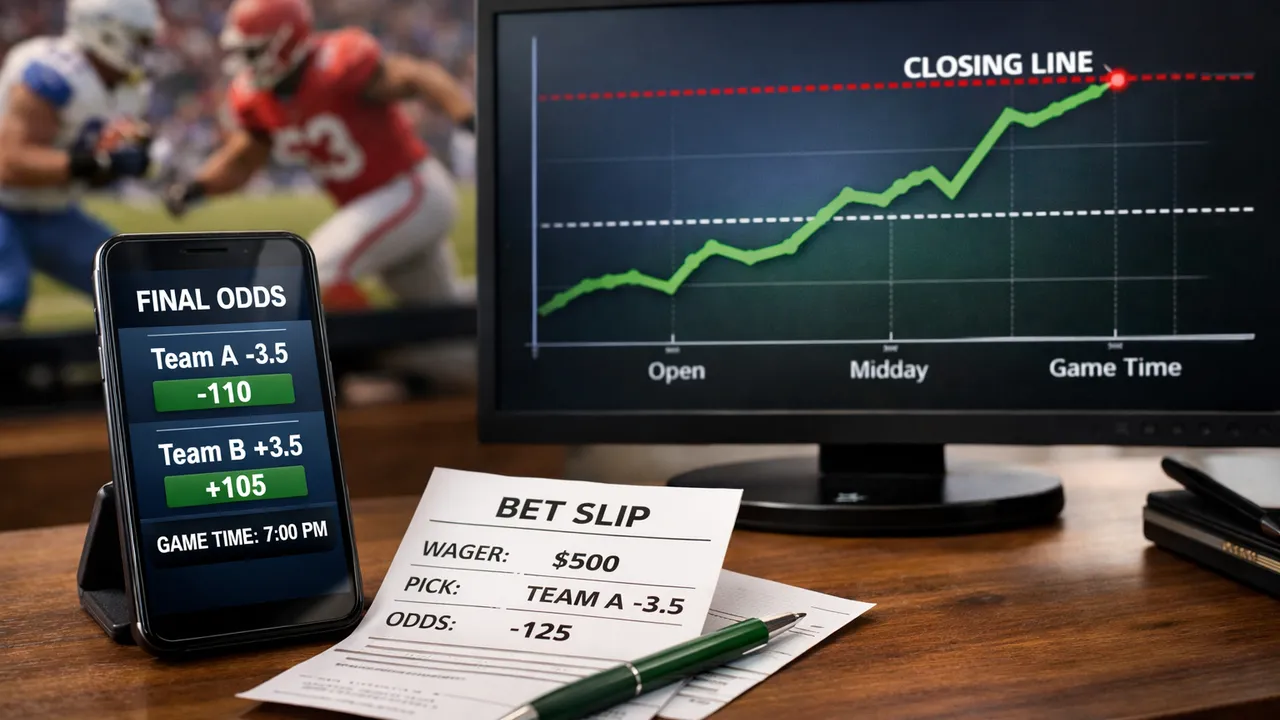
Asian handicap betting removes the draw from the equation and turns many uneven matches into a tighter market. The format matters most in football, where one goal changes both the result and the settlement, so understanding line mechanics is more important than chasing a price.
This guide breaks down how Asian handicap lines work, how bookmakers settle quarter-ball and half-ball bets, where players misread value, and why market movement often tells more than a headline odds shift.
What Asian handicap betting changes in a match market
Asian handicap betting assigns a virtual goal start to one team before kickoff. The stronger side usually gives a handicap such as -1, -1.5 or -0.75, while the underdog receives the mirror line at plus odds or shorter protection.
The key difference from a standard handicap is settlement flexibility. Some lines allow a push, and quarter-goal lines split the stake across two nearby handicaps. That structure reduces dead heat confusion and creates a cleaner pricing model for football than traditional three-way handicaps.
Bookmakers use Asian lines because football scores cluster around one-goal margins. A large share of top-league matches finish with a difference of 0 or 1 goal, so lines like 0, -0.25, -0.5 and -0.75 sit close to the true decision point. For the bettor, that means every half-step carries a real pricing consequence.
How the main Asian handicap lines are settled
Asian handicap settlement follows a simple rule: add or subtract the handicap from the final score, then grade the bet. The complexity comes from quarter lines, where one stake becomes two separate bets.
The table below shows the most common line types and what has to happen on the pitch for the bet to win.
| Line | Team backed | Wins if | Push if | Loses if |
|---|---|---|---|---|
| 0 | Favorite or underdog | Team wins | Match draws | Team loses |
| -0.5 | Favorite | Team wins | Never | Draw or loss |
| +0.5 | Underdog | Team wins or draws | Never | Team loses |
| -1 | Favorite | Team wins by 2+ | Team wins by 1 | Draw or loss |
| +1 | Underdog | Team wins, draws, or loses by 1 | Never | Loses by 2+ |
| -0.25 | Favorite | Team wins | Half stake refunded on draw | Half loss on draw, full loss on defeat |
| +0.25 | Underdog | Team wins | Half win on draw | Full loss on defeat |
| -0.75 | Favorite | Full win by 2+, half win by 1 | Never | Draw or loss |
| +0.75 | Underdog | Full win on win or draw, half win on 1-goal loss | Never | Loses by 2+ |
Quarter-goal lines are the ones most often misunderstood. A bet on -0.25 splits into 50 percent on 0 and 50 percent on -0.5. A bet on -0.75 splits into 50 percent on -0.5 and 50 percent on -1. The same logic applies to positive lines.
Example of a quarter-goal settlement
If you back a team at -0.75 for a 100-unit stake, the bookmaker places 50 units on -0.5 and 50 units on -1. If the team wins by exactly one goal, the -0.5 half wins and the -1 half pushes. You do not get a full win, and you do not lose the whole stake.
This matters because many bettors compare -0.75 to -1 and treat them as almost identical. They are not. The difference is often the difference between a profitable and a break-even result on a one-goal win.
Why Asian handicap is strongest in football betting
Asian handicap betting fits football because the sport produces low-scoring distributions. In basketball or tennis, point spreads and game handicaps already absorb frequent scoring swings. In football, one goal is often enough to decide both the match and the bet.
That is why the market is especially active in the Premier League, La Liga, Serie A and the Champions League. In these competitions, price-sensitive bettors often prefer Asian handicap over the 1X2 market because it isolates margin rather than simple outcome. A favorite priced at 1.62 to win may be available at 2.02 on -1, which creates a different risk profile and a more precise read on expected dominance.
The market is also useful for underdogs with strong defensive numbers. A mid-table side that concedes 0.9 expected goals per match over a six-game sample may offer more protection at +0.75 than in the double chance market, especially when the favorite rotates after a European fixture.
Reading the line instead of staring at the odds
Asian handicap betting becomes clearer when you focus on the line first and the price second. The line shows what the market expects the margin to be. The odds show how confident the market is in that margin.
A move from -0.5 at 1.90 to -0.75 at 1.98 is more meaningful than a move from 1.90 to 1.82 on the same line. In the first case, the market has shifted the expected winning margin. In the second, it has only adjusted confidence around the same handicap.
Sharp action often appears through line movement rather than dramatic odds cuts. If a team opens at -0.25 and closes at -0.75, the market has materially upgraded that side. The reasons can include confirmed lineups, rest advantage, weather, tactical mismatch or injury news in central defense. A bettor who understands the handicap ladder can read that information faster than someone who only checks the match winner market.
What a common line ladder usually means
0 means the teams are rated close, with draw protection built in.
-0.25 or +0.25 means a slight edge, but the draw remains a major part of the pricing.
-0.5 means the market expects one team to win more often than not, with no refund on a draw.
-0.75 and -1 mean the market starts pricing in a one-goal victory as a central outcome.
-1.25 and beyond mean the favorite is expected to control the match and create enough volume for a multi-goal win.
Practical examples from real match profiles
Consider a home favorite that ranks top three in shots in the box and presses high, facing an away side that struggles against aggressive possession teams. If the market posts the favorite at -1, it is saying a one-goal win is a live result but not enough for a full payout. That line often suits teams that dominate territory but do not always convert early chances.
Now take a derby or knockout first leg. These matches often produce compressed pricing because game state matters more than raw quality. A superior team may still open only at -0.25 or -0.5 because both sides accept lower risk. Bettors who ignore context and back the stronger badge at a heavy line usually overpay.
Another useful profile is the underdog at +1.25 against a favorite with fixture congestion. If the favorite has played three matches in eight days and rotates two attackers, the market may still respect brand strength. In those spots, the underdog can remain live even in defeat, because a one-goal loss gives a half win at +1.25.
Where bettors make mistakes with Asian handicap lines
The biggest mistake is treating every handicap as a simple opinion on who is better. Asian handicap is a margin market. You are betting on how much separates the teams after 90 minutes plus stoppage time, not on who looks stronger on paper.
Another mistake is ignoring settlement detail. A lot of casual bettors back -1 expecting a full payout on any win. That is false. A one-goal win returns the stake. The same confusion appears on +0.75, where a one-goal defeat does not mean a full loss.
Three practical errors show up again and again:
Backing a favorite at -1.5 when the team often slows the game after taking the lead.
Taking an underdog at +0.5 without checking whether the side creates enough chances to survive sustained pressure.
Comparing prices across bookmakers without confirming that the line is identical.
The last point matters more than it looks. Odds of 1.95 on -0.75 can be worse than 1.82 on -0.5, depending on your model and the likely scoreline distribution. Price shopping only works when you compare the same handicap.
How to choose between 1X2 and Asian handicap
Asian handicap is usually the better tool when your opinion concerns match control or expected goal margin. The 1X2 market is better when your edge depends heavily on the draw itself.
If you think a favorite wins narrowly most of the time, a line such as -0.5 or -0.75 may fit better than a straight win at a short price. If you think a cautious match is likely to end level, the draw in 1X2 can carry more value than either side on handicap.
There is also a pricing angle. In efficient football markets, the 1X2 and Asian handicap lines are linked, but not always perfectly. Team news can affect draw probability and winning margin differently. A missing striker may reduce the chance of a two-goal win more than it reduces the chance of any win. In that case, the handicap line often reacts more sharply than the match winner price.
What to check before placing an Asian handicap bet
A good Asian handicap decision starts with margin-related variables. Team strength matters, but style, schedule and game state tendencies matter just as much.
Use a short checklist before committing:
Check lineups and likely rotations, especially in full-back and center-back positions.
Review recent scoring margins, not just wins and losses.
Look at expected goals for and against over at least five to eight matches.
Assess motivation and match format. League game, cup tie and first leg do not price the same way.
Watch market movement. A shift in line often carries more information than a small odds change.
One more detail is often missed: late goals distort perception. A team that wins 3-0 after scoring twice in stoppage time did not necessarily justify a pre-match -1.5 line for most of the game. Margin analysis should separate process from final score noise.
Using Asian handicap with discipline
Asian handicap betting rewards precision and punishes lazy assumptions. The strongest approach is to think in score margins, understand how each quarter line splits the stake, and compare the market line with your own view of how the match is likely to unfold.
For practical use, keep the framework simple. If you expect a balanced match, focus on 0 and ±0.25. If you expect a narrow edge, study ±0.5 and ±0.75. If you expect sustained superiority, move to -1 and beyond, but only after checking whether the favorite has the attacking profile to turn control into separation on the scoreboard.
Most mistakes come from reading the badge, the table or the headline odds instead of the handicap itself. Read the line first, then the price, then the context. That order gives a cleaner view of risk and a far better understanding of what your bet actually needs from the match.