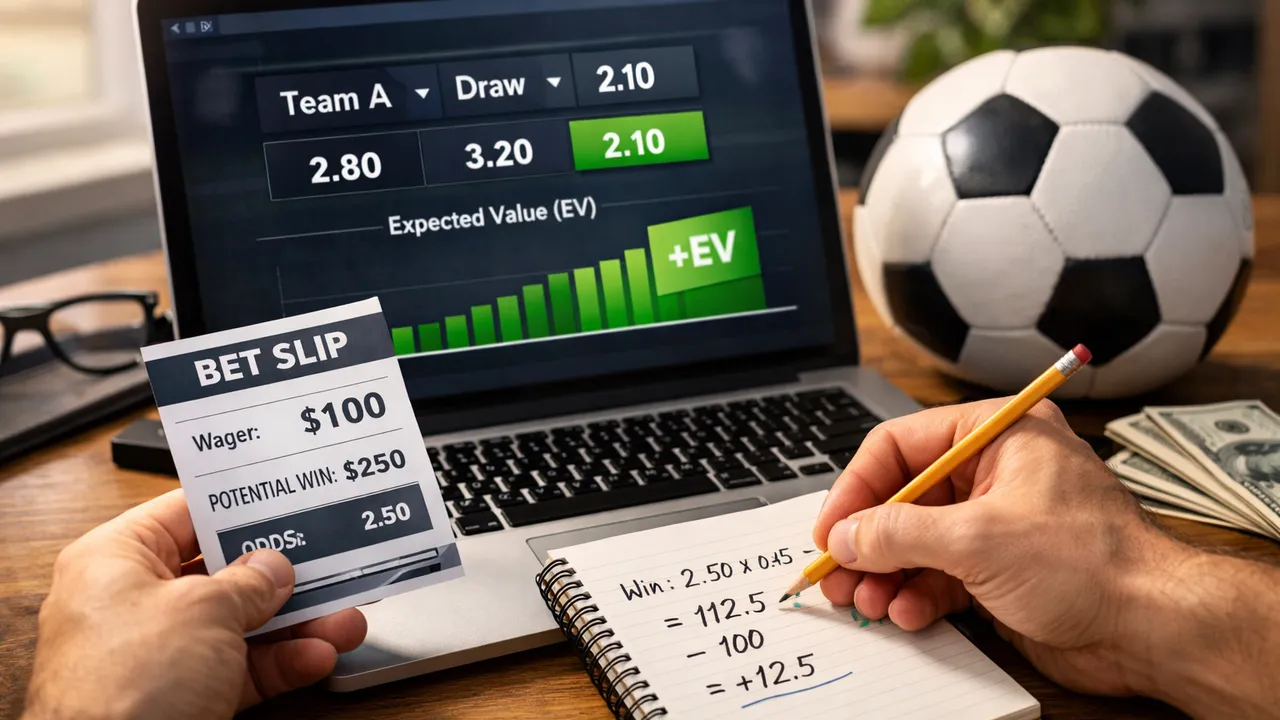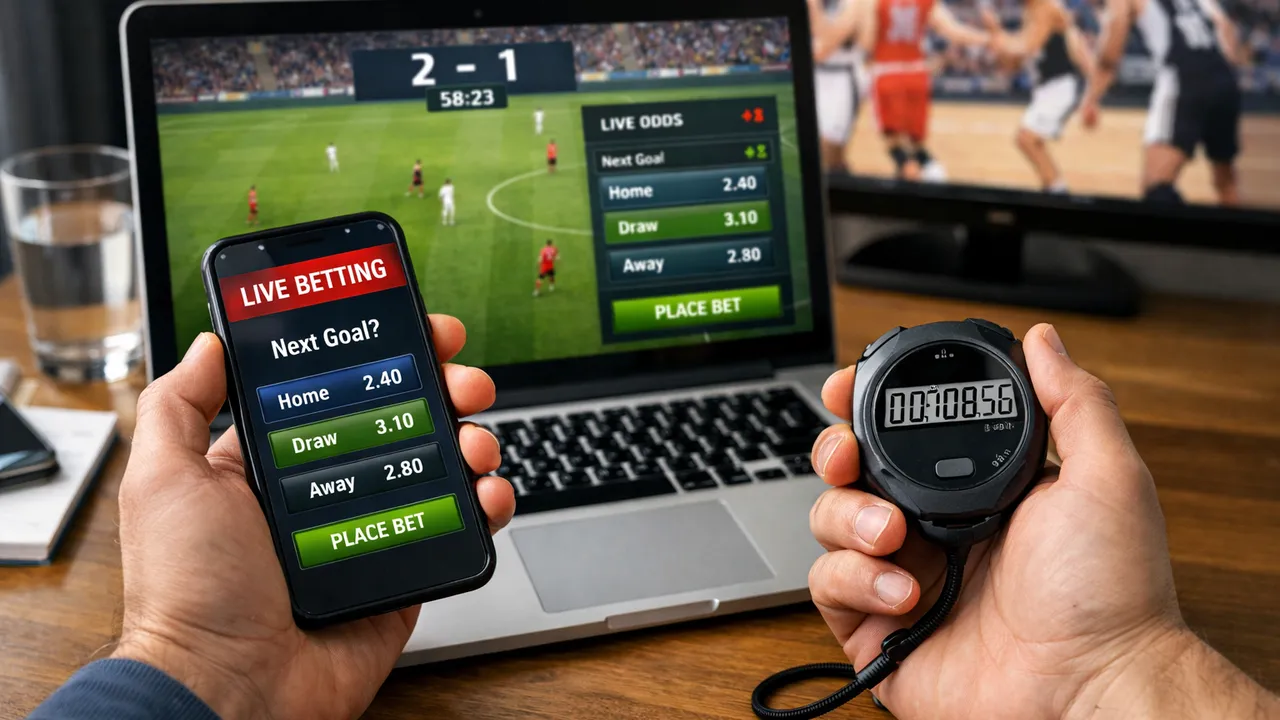
Live betting strategy starts with one hard truth: in-play markets reward speed, but they punish rushed decisions. The edge rarely comes from predicting every twist of a match. It comes from reading game state faster than the market adjusts, then knowing when the price is still playable and when it is already gone.
This article breaks down how to approach live betting with structure. The focus is on timing, market behavior, sport-specific signals, bankroll control, and the mistakes that turn a reasonable position into a bad one.
What a live betting strategy actually needs
A workable live betting strategy needs three elements: a pre-match view, a trigger for entry, and a limit for risk. Without those three, in-play betting becomes a chain of reactions to scoreboards, commentary, and momentum narratives that often arrive too late.
Pre-match work matters because live prices do not exist in a vacuum. If a football favorite opens at 1.70 and drifts to 2.10 after a poor first 20 minutes, that move means little unless you already know whether the market overrated the favorite, whether the team rotates heavily, or whether the opponent presses well in transition. The live number only becomes useful when it meets prior context.
Entry triggers should be specific. “The team looks better” is not specific. “The underdog has conceded six shots inside the box in 12 minutes and the total goals line has not moved enough” is specific. Risk limits should also be fixed before kickoff. Many experienced bettors cap a single live position at 0.5% to 1.5% of bankroll because volatility is higher and information arrives unevenly.
How in-play odds move and where value disappears
Live odds move on three layers at once: the score, the clock, and the quality of chances. The score drives the biggest jump, the clock steadily changes baseline probability, and chance quality creates the temporary mispricing that bettors try to exploit.
Bookmakers and exchanges update lines within seconds, but not every market reacts with the same precision. Main lines such as match winner, Asian handicap, and total goals are usually the most efficient. Secondary props can lag longer, especially in lower-profile matches, niche leagues, or fast sequences where the feed and the model struggle to keep up.
The most common mistake is chasing a number after the market has already corrected. A football over 2.5 line at 1.95 may be attractive after a frantic opening. The same over at 1.62 two minutes later, after three dangerous attacks and a VAR check, often carries the same narrative but a much worse price. The read can be right and the bet can still be poor.
| Market factor | What changes | Why it matters |
|---|---|---|
| Scoreline | Sharp repricing | Goals, red cards, and breaks of serve cause the fastest moves |
| Time elapsed | Gradual decay or rise | Totals and comeback prices tighten as time runs out |
| Chance quality | Short-term inefficiency | Not every dangerous spell is priced instantly or correctly |
| Market depth | Different speed of adjustment | Main markets are tighter; props may lag longer |
| Feed delay | Execution risk | A visible edge can vanish before the bet is accepted |
Timing matters more than prediction
The strongest live betting decisions often come from timing rather than bold forecasting. You do not need to call the exact next event. You need to enter when the price still reflects an outdated state of play.
In football, that often means waiting through the first burst of pressure instead of betting after the first loud moment. A team can produce two corners and one blocked shot in 90 seconds without creating a real structural advantage. If the same pressure continues for 10 minutes, full-backs pin the opponent deep, and the defensive line stops clearing second balls, the pattern becomes more reliable.
In tennis, timing is even more sensitive. A break of serve changes the market sharply, but not every break has the same weight. A break earned through two double faults and one net cord says less than a break earned through repeated returns deep to the backhand side. Context matters because the market often prices the event faster than it prices the reason behind the event.
Useful entry points in live markets
Good entry points usually appear when the market overreacts to a visible event or underreacts to sustained pressure.
- After a goal against the run of play, when the stronger side still controls territory and chance volume.
- After an early break in tennis, if the server still wins a high share of first-serve points and creates return pressure.
- After a red card, but only once the tactical shape becomes clear and the bookmaker has not fully adjusted the total or handicap.
- After a timeout or quarter break in basketball, when rotation patterns reveal a mismatch that the pre-game line did not price well.
Reading game state without getting trapped by momentum
Game state is the core of in-play betting. The problem is that many bettors confuse game state with momentum. Momentum is often just a sequence of visible events. Game state includes score, time, fatigue, tactical shape, substitutions, foul trouble, and how each team now wants the match to look.
A football team leading 1-0 in the 68th minute may allow possession by choice. If that team protects the half-spaces, wins aerial duels, and forces low-value crosses, the trailing side can look active without becoming dangerous. Betting overs or the equalizer just because one side “pushes” is a classic live error.
Basketball creates a similar trap. A 10-0 run attracts attention, but the cause matters. If the run comes against bench units and the starters return in 90 seconds, the market may have moved too far. If the run comes because a rim protector picked up a fourth foul and the opponent now attacks the paint every possession, that shift is more durable.
Useful live reads usually come from repeatable indicators:
- Shot quality rather than raw shot count
- Field position rather than possession percentage
- Serve and return quality rather than one break alone
- Foul count, substitutions, and fatigue signals in fast-paced sports
- Tactical changes that alter chance creation, not just tempo
Sport-specific live betting angles
Different sports produce different kinds of in-play value. A live betting strategy should reflect how each market forms and where the information gap appears.
Football
Football markets are heavily driven by scoreline and time decay. Totals, next goal, draw no bet, and Asian handicaps are the most common live tools. The strongest reads often come from territorial control, box entries, set-piece volume, and whether the favorite can sustain pressure after conceding first. xG models help, but live bettors should treat public xG feeds carefully because not all providers grade chances the same way and not all updates arrive instantly.
A practical example: if a favorite goes 0-1 down in the 14th minute and the live line moves from -0.75 pre-match to level ball, the price may still be fair if the underdog is defending deep and conceding clean entries. If the favorite also loses its main set-piece taker or struggles against counters, the same move may be justified.
Tennis
Tennis rewards close attention to serve quality, physical condition, and point construction. Live markets often overvalue a single break and undervalue a visible decline in movement. A player who still holds at love after a medical timeout presents a different picture from a player who starts shortening rallies and avoiding wide exchanges.
Watch first-serve percentage, second-serve points won, and return depth. If a player breaks but wins only 38% behind the second serve, that lead is fragile. In women’s tennis, where breaks can cluster more often, market swings may look dramatic but remain reversible within one service game.
Basketball
Basketball live betting is driven by pace, shot profile, rotation depth, and foul trouble. The market reacts quickly to scoring runs, but quarter breaks and timeout adjustments can create short windows. Team totals and alternate spreads become more interesting when one side consistently creates corner threes or paint touches that the opponent cannot solve.
Be careful with overtime assumptions. A total that looks dead in the final minute should not be backed solely because overtime is possible. That is not strategy. That is paying for a low-frequency rescue event.
Bankroll control is stricter in live betting
Bankroll discipline matters more in-play because the pace of decision-making is faster and emotional leakage is higher. A bettor can make five poor decisions in 20 minutes without noticing the pattern until the match ends.
Flat staking remains the cleanest method for most players. A narrow range such as 0.5% to 1% per live bet reduces the damage from variance and from bad execution. Some bettors allow 1.5% only when the pre-match read and the live trigger align clearly. Anything above that requires a level of pricing confidence that most recreational players do not have.
Two rules help immediately:
- Set a maximum number of live entries per match. Two or three is usually enough.
- Do not increase stake size after a missed price or a bad beat. The market does not owe a correction.
Chasing is especially dangerous in sports with constant action. Basketball and tennis can generate a false sense that another perfect spot is always seconds away. In practice, fatigue lowers judgment long before the session ends.
Common live betting mistakes that ruin solid reads
Most live betting losses do not come from one bad opinion. They come from poor execution around a reasonable opinion.
The first mistake is betting the screen instead of the match. If you rely only on score apps, you miss shape, body language, tactical changes, and injury signs. The second mistake is reacting to commentary language. Broadcasters amplify pressure and drama, but the market already prices the obvious moments aggressively.
The third mistake is ignoring delay. Many sportsbooks apply a few seconds of confirmation delay on live bets. In fast markets, especially tennis and basketball, that delay can turn a good number into a stale one. If your edge depends on one point or one possession, the delay is part of the price.
The fourth mistake is building a live position without an exit condition. If you back over 2.5 goals because the game is open, you should know what would invalidate the read. A red card to the attacking side, a key striker substitution, or a tactical retreat after taking the lead can all change the logic.
How to build a repeatable routine before and during matches
A repeatable process beats improvisation. The goal is not to watch more matches. The goal is to watch with filters that connect pre-match expectations to live evidence.
Before kickoff, note the baseline line, expected tempo, likely pressing structure, and any lineup changes that affect chance creation. During the match, track only a few variables that matter for the market you want to play. In football, that may be box entries, transition defense, and set-piece threat. In tennis, it may be first-serve percentage, return depth, and movement after long rallies.
Keep records. Not just wins and losses, but entry minute, market type, closing price relative to your bet, and why you entered. After 100 live bets, patterns usually appear. Many bettors discover that they read football totals well but force too many tennis comebacks, or that they enter too early after visible pressure.
Practical framework for better in-play decisions
A strong live betting strategy is built on selectivity. The best move is often no move, especially when the market has already caught up or the match state is noisy.
Use pre-match context to decide what would count as a real trigger. Wait for evidence that changes probability, not just emotion. Respect price movement, because a good idea at the wrong number is still a bad bet. Keep stake size controlled, track execution, and review where your read was right but your timing was poor.
That approach will not remove variance. It does make live betting more coherent, less reactive, and easier to evaluate over time. In-play markets move fast, but the bettors who last are usually the ones who slow their own process down.